September 30th. to November 5th., 2023
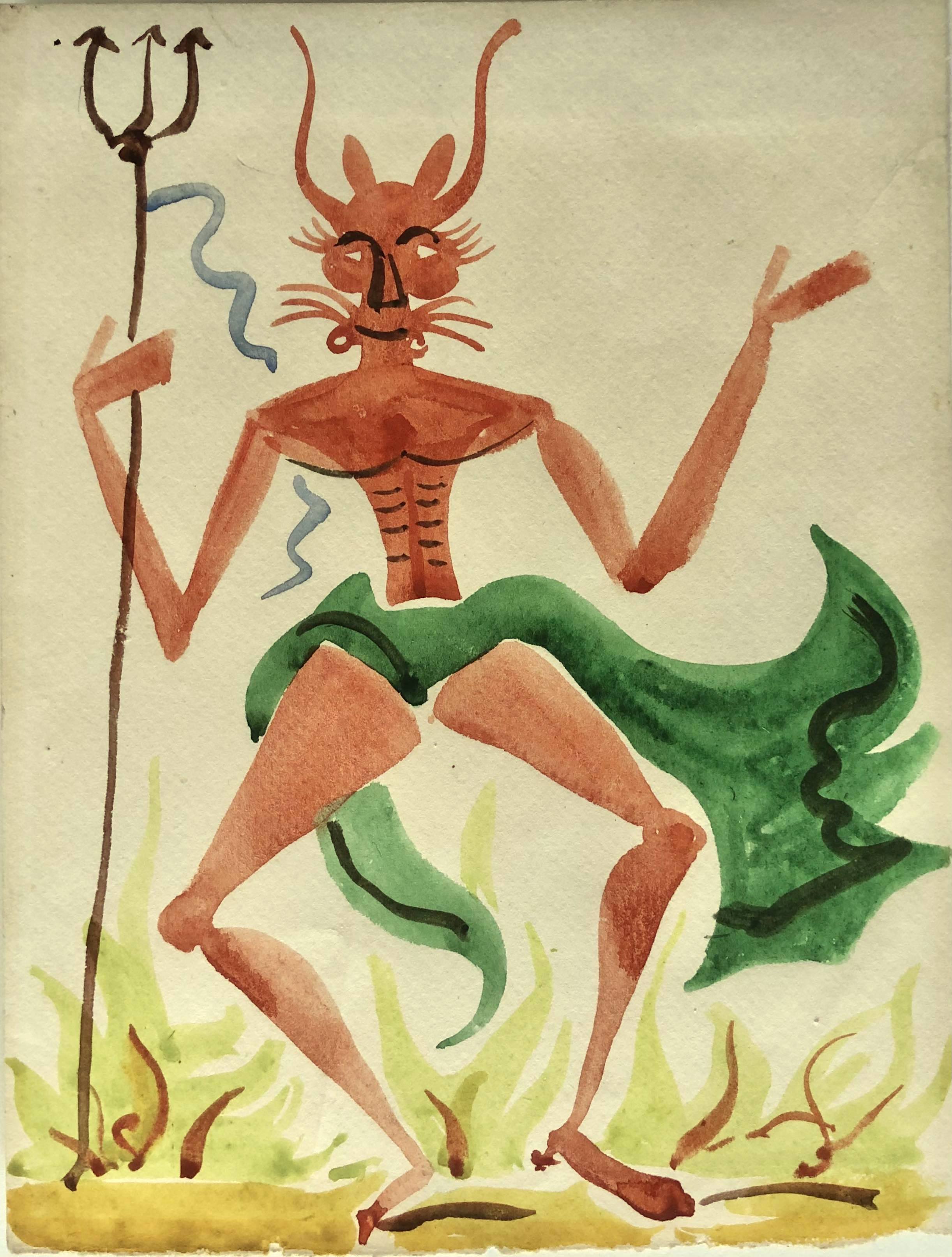


André Derain is a pivotal figure in modern painting. Alongside close colleagues such as Braque, Matisse and Picasso, he pioneered first Fauvism, around 1904-6, then Cubism, around 1908-13. Thereafter he steered a highly personal course, independent of movements. Eschewing obvious stylistic innovation (notably pure abstraction, an option he certainly contemplated), he conducted a synoptic investigation into appearance and representation.
From early on, eclecticism – rather than vanguardism – was an evident concern. He drew on Cézanne, on African sculpture, Seurat and Gauguin, marrying these influences with iconographic traits from Byzantine art and the Italian pre-Renaissance, from Baroque tenebrism and Dutch vanitas painting. On the eve of the WWI he was making sequences of head-and-shoulder or half-length figure paintings (often not portraits as such, more evocations of human presence). In them he experimented with a compound equation of physiognomy, expression, style, illusion and allusion, symbol and sign. Increasingly subtle and complex, his synthetic project bespoke a philosopher-artist, an esoteric, exploring the nature of art and of reality itself as a kind of Mystery.
And (yet) he was pragmatic and unpretentious. On return from the trenches he resumed what would be a lifelong pursuit of landscape painting, often en plein air, in deceptively simple-looking pictures that acknowledge Corot as a guiding spirit. Still life and figure painting remained equally important to him, and the nature of genre itself was a central concern. He alternated small, spontaneous, notational sketches with grand, slightly archaising set-pieces, such as hunting still-lives, Commedia Dell’arte tableaux, mythic scenes, society portraits, theatrical costume pictures and nudes in Classical or informal idiom. Art-historical affinity and quotation grew so dense and layered as to become a kind of mode of consciousness, a medium in itself, through or rather in which human perception and expression was realised.
But tradition and convention in Derain are not appealed to as set or static ‘rules’ or ideals. Although he was often accused of conservatism, for apparently turning his back on avant-garde ‘progressiveness’, such criticism was misconceived. His was not a rappel a l’ordre so much as a call to curiosity, playfulness, invention. He constantly stretches norms, distorts faces and bodies to the limits of credibility, loosens and dislocates anatomy, deviates from perfection, broaches caricature. He varies and exaggerates painterly manners and techniques from picture to picture and within pictures, making painterly language conspicuous, semi-opaque. He takes apart belle peinture, then reconstitutes it, with a disabused but never cynical consciousness of its conceits and codes. It is for something like these reasons that he became an ‘artists’ artist’ admired by such figures as Balthus, Giacometti and Duchamp. Thwarting his own virtuosity (practicing ‘deskilling’ as we say now), and at times emulating a ‘folk’ and ‘outsider’ vernacular, Derain anticipates much in postmodern figurative painting.
In Derain’s final years, after WWII, we have a paradigmatic ‘late style’, an apparent technical relaxation and liquidity, with imagery bordering on the ludic or absurd. There are numerous déjeuners sur l’herbe, bacchanals and fêtes champêtre, populated by mercurial figures, either puppet-like and robotic, or seemingly conjured to life from the agitated, calligraphic brushwork itself. Still-lifes, meanwhile, become meagre, almost cursory, yet possessed again of a strange vitality, as if coming into existence before our eyes. Busts, half-length figures and nudes also proliferate, increasingly fluent and yet evermore odd and awkward, warped, uncanny, sometimes disturbing, often melancholy. Some have the air of ancient images, perhaps frescos recovered from other civilisations, but possessing a startling vitality and immediacy, belying their seeming antiquity. As in works from right across Derain’s career, these late pictures seem finally to exist entirely in the fictional, timeless dimension of Art. They are pure painting.
******
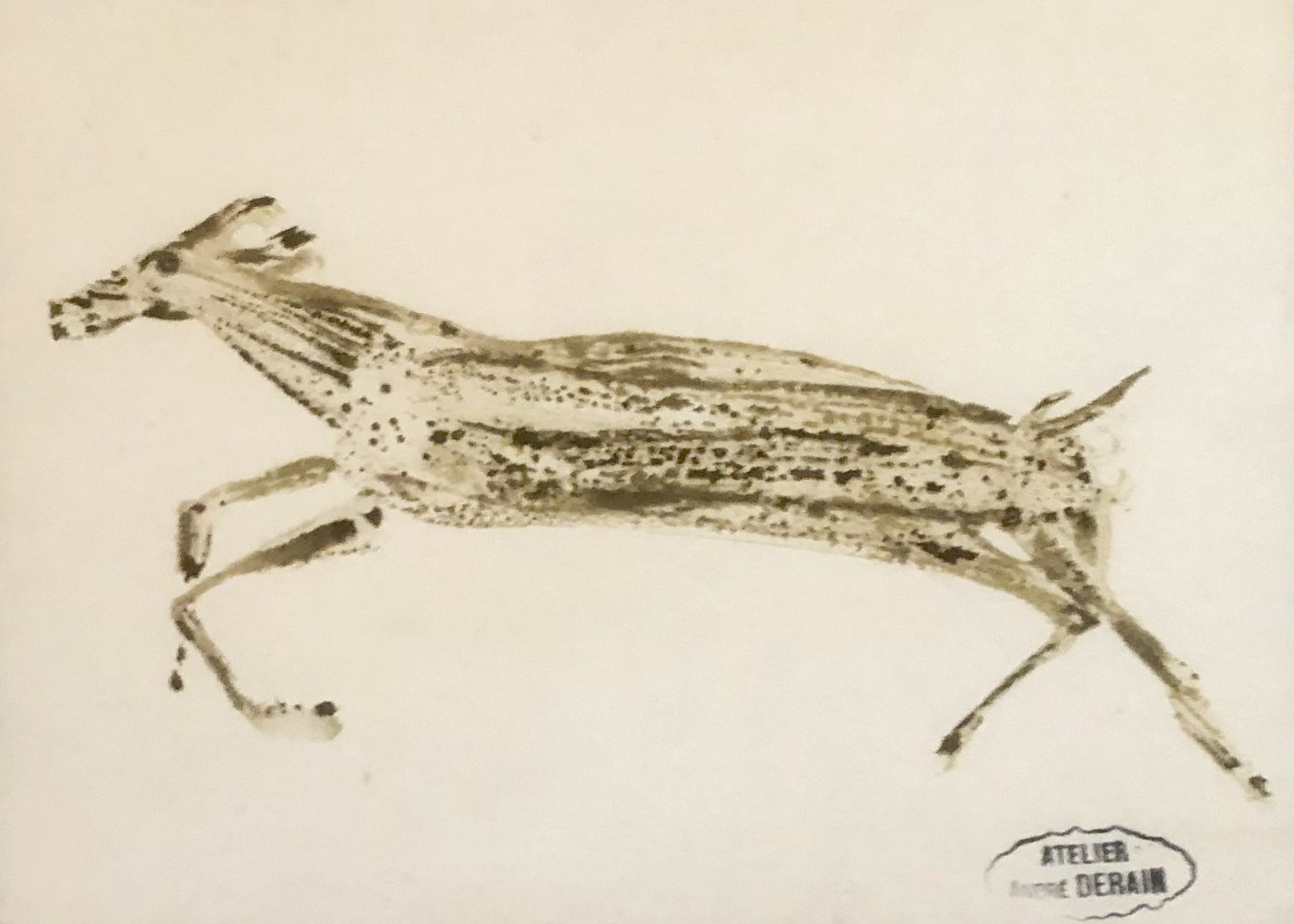
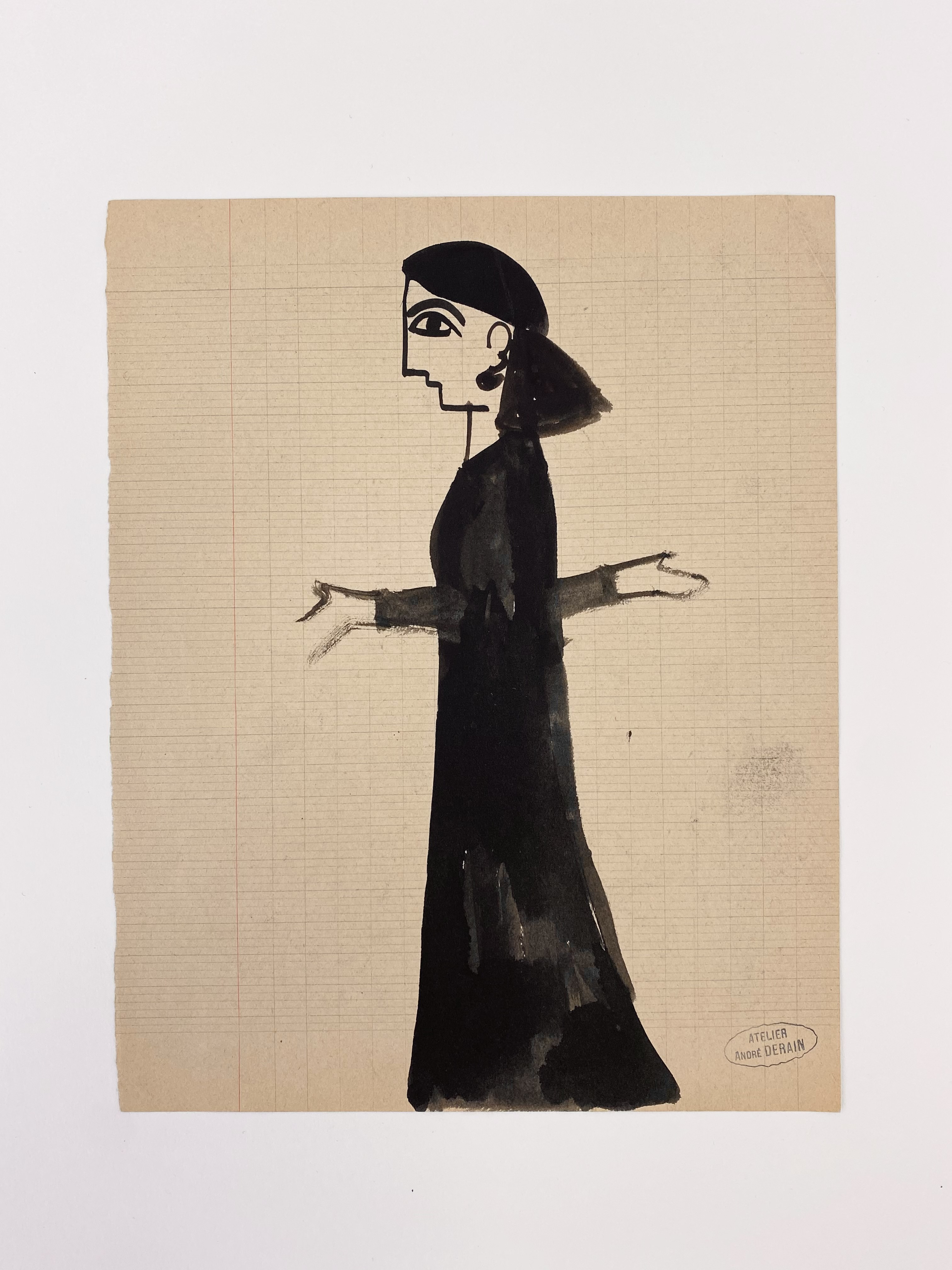
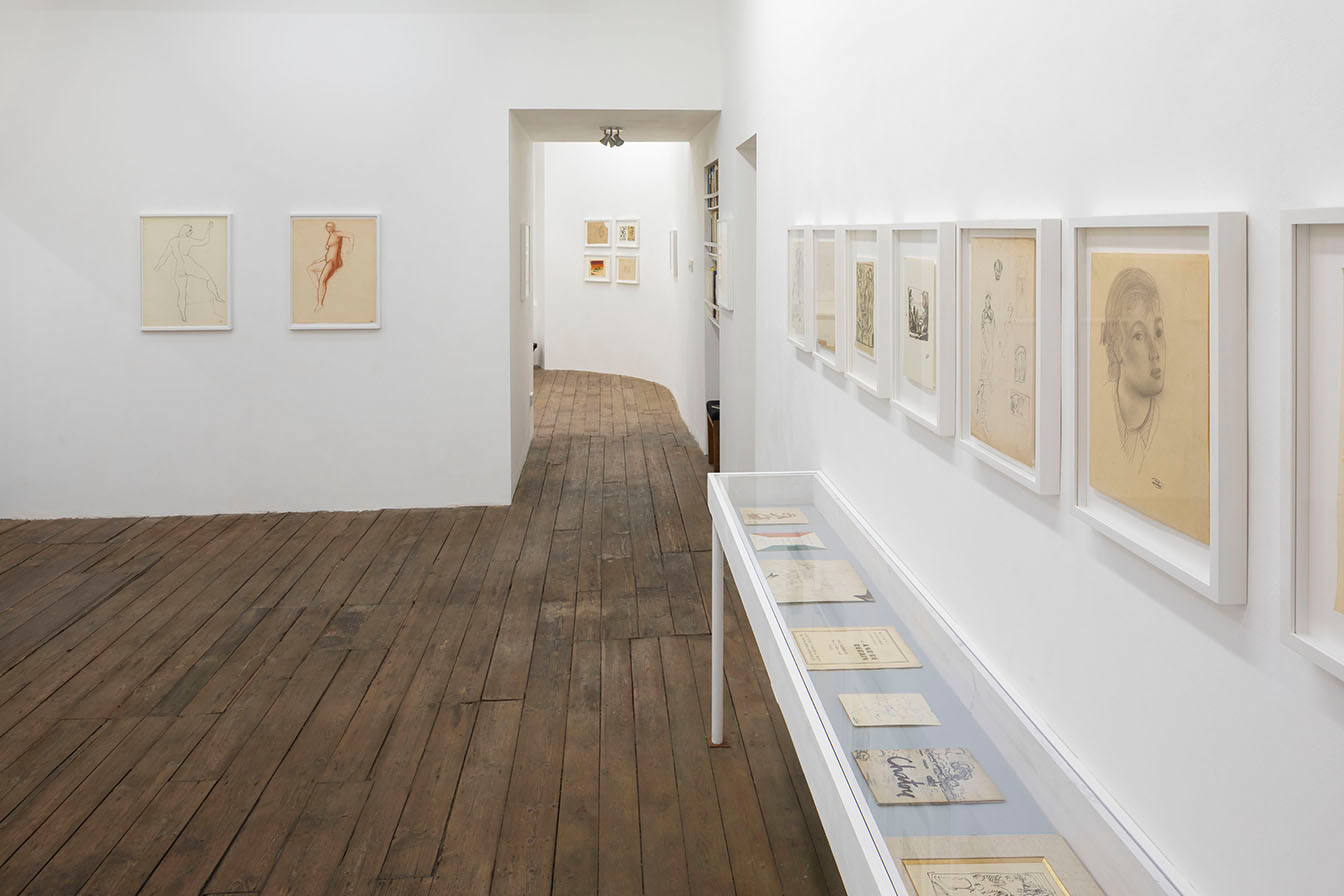
Derain made drawings habitually, often in preparation for, or association with, planned paintings. At other times he sketched and doodled speculatively, as well as making ‘finished’ drawings as works in their own right. This exhibition features works from across his career, spanning the early 1900s to the early 1950s, selected largely from a group of studies that remained for a long time in his studio and that have not been previously exhibited. It includes landscapes, animal studies, emblematic figures, nudes, portraits, sketches associated with theatre or dance, still lifes and bacchanals. Several of the sheets can be related to major oil paintings.
******
This exhibition is dedicated to the fond memory of Robert Stoppenbach (1948-2020).




 42 Carlton Place